
Vegetable Vanapasti Ghee
Vegetable Vanapasti Ghee
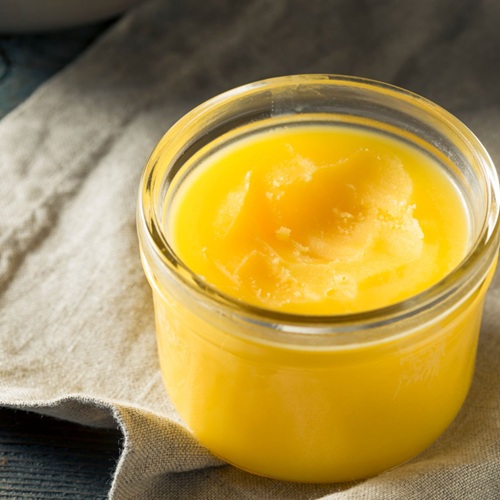
Vegetable Vanaspati Ghee, also known as vegetable ghee or simply vanaspati, is an all-purpose cooking fat widely used in the Indo-Pakistan subcontinent and Middle Eastern countries as a cost-effective substitute for traditional dairy ghee. It is typically a blend of palm oil and palm fractions, presenting a semi-solid to solid consistency at ambient temperature with a characteristic granular or grainy texture that is particularly preferred by consumers in India and Pakistan.
The product is generally neutral in taste and smell, free from staleness or rancidity, and is formulated to have a slip melting point ranging from approximately 31°C to 45°C, depending on the intended regional market and climate
Vegetable Vanaspati Ghee is produced through a multi-stage process beginning with the refining, bleaching, and deodorization (RBD) of crude palm oil and its fractions.
The refined oils are then subjected to controlled hydrogenation in the presence of a nickel catalyst under low to medium pressure, which raises the melting point and imparts the characteristic solid consistency of ghee. For palm-based formulations, a trans-free approach is often employed using a blend of RBD palm stearin (e.g., iodine value 30) and palm olein (e.g., iodine value 58), typically in a 40:60 ratio, followed by controlled crystallization and tempering to achieve the desired granular or smooth texture. The final product is then blended with permitted additives such as antioxidants, beta-carotene for colour, and butter flavours, before being packaged in tins or cartons
Vegetable Vanapasti Ghee Specification
| Parameter | Specification |
|---|---|
| Product Name | Vegetable Vanaspati Ghee (Vegetable Ghee / Hydrogenated Vegetable Oil) |
| Definition | Refined edible vegetable oil subjected to hydrogenation, interesterification, or fractionation |
| INCI Name | Hydrogenated Vegetable Oil |
| CAS No. | 68334-28-1 (Hydrogenated Vegetable Oil) |
| HS Code | 1516.20 |
| Appearance | Creamy white to yellow; solid / semi-solid at ambient temperature; granular to smooth texture |
| Odour & Taste | Bland to buttery; free from staleness and rancidity |
| Origin | Palm Oil, Palm Stearin, Palm Olein (or other vegetable oils) |
| Processing Type | Hydrogenated, Interesterified, or Fractionated |
Quality Parameters
| Parameter | Method / Reference | Specification |
|---|---|---|
| Moisture | FSSAI / Codex | 0.25% max |
| Free Fatty Acid (as Oleic Acid) | FSSAI / Codex | 0.25% max |
| Slip Melting Point | Capillary Slip Method | 31 – 41°C (FSSAI); 36 – 41°C (Codex / Singapore) |
| Unsaponifiable Matter | FSSAI / Codex | 2.0% max (2.5% max if rice bran oil > 30%) |
| Peroxide Value | Codex | 10 meq/kg max |
| Acid Value | Codex | 0.6 mg KOH/g max |
| Iodine Value (Wijs) | AOCS Cd 1-25 | 45 – 56 (typical palm-based) |
| Fat Content | Codex | 99.5% min |
| Colour (Lovibond 5.25″ cell) | AOCS Cc 13e-92 | 5.5 – 6.6 Red / 55 – 65 Yellow (typical) |
| Saponification Value | — | 168 – 187 mg KOH/g (Codex); 193 – 194 (typical) |
| Trans Fat | FSSAI / Codex | 5% max (as per FSSAI regulation) |
| Synthetic Vitamin A | FSSAI | 25.0 IU/g min at time of packing |
| Baudouin Test | FSSAI | Positive (presence of sesame oil required) |
Fatty Acid Composition (Typical)
| Fatty Acid | Carbon Chain | Specification (%) |
|---|---|---|
| Lauric Acid | C12:0 | 0.5 – 1.5 |
| Myristic Acid | C14:0 | 1.0 – 2.0 |
| Palmitic Acid | C16:0 | 40 – 48 |
| Stearic Acid | C18:0 | 4 – 6 |
| Oleic Acid | C18:1 | 35 – 42 |
| Linoleic Acid | C18:2 | 8 – 12 |
| Trans Fatty Acids | C18:1t | 0.3 – 6.2 |
Applications in Deep Frying & Snack Preparation
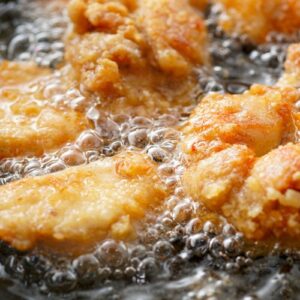
Vegetable ghee is a preferred medium for deep frying due to its high smoke point and excellent oxidative stability. It is widely used to fry samosas, pakoras, puris, and other South Asian snacks, delivering a crisp texture and golden colour without imparting any off-flavours.
Applications in Baking & Pastry Shortening
In baking, vegetable ghee functions as a versatile shortening for cakes, biscuits, pastries, and breads. Its semi-solid consistency allows it to cream easily with sugar, incorporating air to create light, tender baked goods. Its neutral taste ensures it does not interfere with other ingredients.

Applicatios in Curries, Dals & Everyday Cooking
Vegetable ghee is a staple cooking medium in South Asian households for preparing curries, dals, sabzis, and rice dishes. It withstands high temperatures and provides a rich, buttery mouthfeel without the cholesterol content of traditional dairy ghee. Its neutral flavour makes it suitable for both savoury and sweet preparations.
Applications in Traditional Sweets & Confectionery
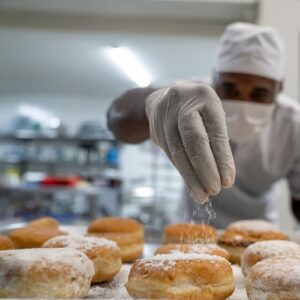
Vegetable ghee is extensively used in Indian and Pakistani sweets such as halwa, laddoo, barfi, and jalebi. It provides the necessary fat for binding, enhances texture, and contributes to the characteristic richness and mouthfeel of these confections. It is also used for garnishing and tempering spices.

Packaging
| Packaging Type | Typical Size / Capacity | 20ft Container Loading |
|---|---|---|
| Tins | 1 kg / 2 kg / 5 kg / 16 kg / 17 kg | 19 – 20 MT (e.g., 1,150 tins × 17 kg = 19.55 MT) |
| Cartons | 10 kg / 16 kg / 20 kg | 19 – 22 MT (e.g., 1,242 cartons × 16 kg = 19.87 MT) |
| Drums | 55 kg / 180 kg / 190 kg | 18 – 20 MT |
| Flexitank / IBC | 20 MT | 20 MT |
Certification
| Certification | Issuing Body / Standard |
|---|---|
| MSPO | MSPO 2.0 (MS2530:2022) |
| Halal | JAKIM |
| Kosher | Recognized agencies (e.g., STAR-K) |
| ISO 9001 | International Organization for Standardization |
| ISO 14001 | International Organization for Standardization |
| GMP | Good Manufacturing Practices |