
Cetyl Stearyl Alcohol C16-C18 30-70
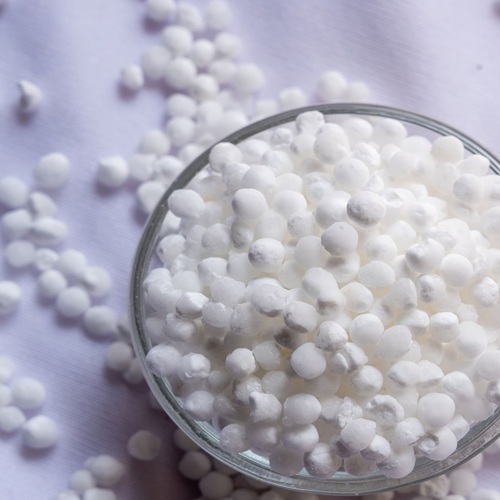
Cetyl Stearyl Alcohol C16-C18 30-70
Cetyl Stearyl Alcohol, also recognized as Ceto Stearyl Alcohol or Cetearyl Alcohol, is a blend of Cetyl (C16) and Stearyl (C18) alcohols in a 30:70 ratio. Both Cetyl and Stearyl alcohols are procured from vegetable sources such as palm oil and palm kernel oil. This long-chain fatty alcohol manifests as a white solid below 48–54°C.
Itis a 100% natural, vegetable-derived fatty alcohol. It is a mixture of Cetyl and Stearyl alcohols, manufactured from fatty acids through esterification and catalytic hydrogenation. It appears as a white, wax-like solid with a characteristic fat-like odour.
Cetyl Stearyl Alcohol is employed in emulsions as a stabilizer. Cetearyl Alcohol is utilized in all personal care products, including skin care, hair care, and colour cosmetics.
Cetearyl Alcohol functions as an emulsifier, emollient, stabilizer, texture enhancer, and carrying agent in numerous cosmetic and personal care products. It conditions and softens the hair and skin, and is frequently incorporated into formulations to augment moisturizing properties.
It is commonly found in products such as skin lotions, moisturizers, creams, sunscreens, shampoos, conditioners, hair removal creams, hair mousse, hair dyes, and mascara.
Cetyl Stearyl Alcohol is a 100% natural, vegetable-derived fatty alcohol, extensively employed in the cosmetic and personal care industry.
Cetyl Stearyl Alcohol C16-C18 30-70 Specification
| Parameter | Specification |
|---|---|
| Product Name | Cetyl Stearyl Alcohol C16-C18 30:70 |
| Common Names | Cetearyl Alcohol, Cetostearyl Alcohol, Ceto Stearyl Alcohol |
| INCI Name | Cetearyl Alcohol |
| CAS No. | 67762-27-0 (blend); 36653-82-4 (Cetyl); 112-92-5 (Stearyl) |
| EC No. | 267-008-6 |
| HS Code | 3823.70.9000 |
| Molecular Formula | C₁₆H₃₄O (Cetyl); C₁₈H₃₈O (Stearyl) |
| Appearance | White solid, flakes, pastilles, or beads |
| Odour | Mild, fat-like |
| Origin | Vegetable-based (palm oil, palm kernel oil) |
Quality Parameters
| Parameter | Specification | Method / Reference |
|---|---|---|
| Acid Value (mg KOH/g) | 0.1 – 0.2 max | USP 401 / ISO 660 |
| Saponification Value (mg KOH/g) | 1.0 max | ISO 3657 |
| Iodine Value (g I₂/100g) | 0.3 – 0.5 max | USP 401 / ISO 3961 |
| Hydroxyl Value (mg KOH/g) | 210 – 228 | USP 401 / ASTM E 1899 |
| Colour (APHA) | 10 max | ISO 6271 |
| Moisture Content (%) | 0.3 max | ASTM E203 |
| Hydrocarbon (%) | 0.5 max | In-house |
| Solidification Point (°C) | 49 – 54 | ISO 3841 |
| Melting Point (°C) | 48 – 54 | — |
Carbon Chain Distribution
| Fatty Alcohol | Carbon Chain | Specification (%) | Typical Value |
|---|---|---|---|
| C14 and shorter | ≤ C14 | 3 – 5 max | — |
| Cetyl Alcohol | C16 | 22 – 35 | ~30 |
| Stearyl Alcohol | C18 | 65 – 76 | ~70 |
| C20 and longer | ≥ C20 | 2 – 3 max | — |
Cetyl Stearyl Alcohol, also recognized as Ceto Stearyl Alcohol or Cetearyl Alcohol, is a combination of fatty alcohols consisting predominantly of Cetyl (C16) and Stearyl (C18) alcohols. It is classified as a fatty alcohol.
It is employed as an emulsion stabilizer, opacifying agent, and foam-boosting surfactant, particularly in moisturizing and skin lotions.
While it contributes some moisturizing benefits, its principal role is to bind formulations and augment product stability.
Additionally, it assists in soothing and healing dry skin.

As a mild fatty alcohol, Cetearyl Alcohol functions as an emollient, moisturizer, emulsifier, and thickener in various cosmetics and personal care products.
Within the cosmetic sector, Cetearyl Alcohol is employed as an opacifier in shampoos and as an emollient, emulsifier, and thickening agent in the fabrication of skin creams and lotions. It is additionally utilized as an additive in oil-based fracturing fluids.
Beyond personal care, Cetearyl Alcohol is used in perfume synthesis and within the pharmaceutical industry as an emulsifier, solubilizer, and stationary phase in gas chromatography.
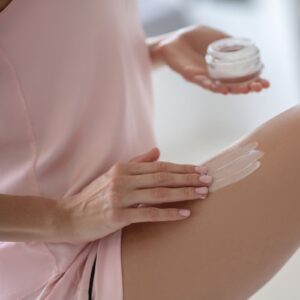
Cetearyl Alcohol ranks among the most frequently utilized ingredients in cosmetic, skin care, and hair care products. It is a white, wax-like substance that functions as a thickening agent and assists in binding ingredients together, averting separation.
Beyond its functional advantages, Cetearyl Alcohol possesses moisturizing attributes and is non-comedogenic, meaning it does not clog pores.
It is a plant-derived emulsifier – a solid white, wax-like product with a characteristic fat-like odour. Fatty alcohols such as Cetearyl Alcohol are manufactured from fatty acids through esterification followed by catalytic hydrogenation.
Packaging
| Packaging Type | Typical Size / Capacity | 20ft Container Loading (Net Weight) |
|---|---|---|
| PP Laminated Paper Bags | 25 kg / bag | 14 MT (560 bags, palletized) |
| Paper Bags (Poly-lined) | 25 kg / bag | Approx. 14–16 MT (varies by palletization) |
| Jumbo Bags / Big Bags | 500 kg / 1,000 kg | Approx. 14–16 MT (varies) |
| Steel Drums | 180 kg / 200 kg | Approx. 17.3 MT (96 drums) |
| ISO Tanks | 20 MT | 20 MT (bulk liquid form) |
| Flexitanks / Bulk | 20 MT | 20 MT (bulk shipments) |
Certification
| Certification | Issuing Body / Standard |
|---|---|
| MSPO | MSPO 2.0 (MS2530:2022) |
| Halal | JAKIM |
| Kosher | Recognized agencies (e.g., STAR-K) |
| ISO 9001 | International Organization for Standardization |
| ISO 14001 | International Organization for Standardization |
| GMP | Good Manufacturing Practices |