
Crude Coconut Oil (CCO)
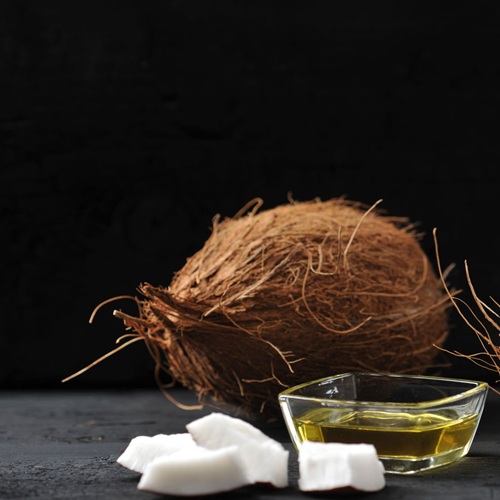
Crude Coconut Oil (CCO)
Crude Coconut Oil (CCO) is a naturally derived, 100% plant-based oil procured from the desiccated kernel (copra) of mature coconuts. Amber-hued with a characteristic coconut scent, CCO exists as a semi-solid at ambient temperature and is prized for its elevated lauric acid concentration and medium-chain triglyceride (MCT) compounds, comparable to palm kernel oil.
At Gayanis Oleochemicals, we provide premium-grade, unrefined crude coconut oil procured directly from reliable estates in the Philippines, Indonesia, and Malaysia. Our crude coconut oil complies with global quality benchmarks and is optimal for international producers across a diverse range of sectors.
Coconut oil is the primary feedstock for oleochemicals, including fatty acids, esters, and surfactants. It is extensively employed in soap production, personal care items, biodiesel, animal feed, and food-grade applications. It can be refined into RBD Coconut Oil for subsequent industrial utilization or used directly in natural formulations.
Gayanis Oleochemicals guarantees consistent supply and purity, rendering our CCO the favored option for businesses seeking dependable and sustainable vegetable oil solutions.
Applications: Oleochemicals, soaps, cosmetics, food additives, animal feed, and biofuels.
Crude Coconut Oil (CCO) Specification
| Parameter | Specification |
|---|---|
| Product Name | Crude Coconut Oil (CCO) |
| Appearance | Golden-yellow to pale brown liquid or semi-solid |
| CAS No. | 8001-31-8 |
| HS Code | 1513.11.0000 |
| Free Fatty Acid (as Palmitic) | 5.0% max |
| Iodine Value (Wijs) | 7.5 – 10.5 |
| Moisture & Impurities | 0.5% max |
| Melting Point | 23 – 27 °C |
| Colour (Lovibond 5.25″) | 3.0R / 50.0Y max |
| Saponification Value | 250 – 264 mg KOH/g |
| Unsaponifiable Matter | 0.5% max |
Fatty Acid Composition
| Fatty Acid | Carbon Chain | Specification (%) | Test Method |
|---|---|---|---|
| Caproic Acid | C6:0 | 0.1 – 0.95 | GC |
| Caprylic Acid | C8:0 | 5 – 10 | GC |
| Capric Acid | C10:0 | 5 – 8 | GC |
| Lauric Acid | C12:0 | 44 – 52 | GC |
| Myristic Acid | C14:0 | 13 – 19 | GC |
| Palmitic Acid | C16:0 | 7 – 10 | GC |
| Stearic Acid | C18:0 | 2 – 4 | GC |
| Oleic Acid | C18:1 | 5 – 8 | GC |
| Linoleic Acid | C18:2 | 1 – 3 | GC |
About Crude Coconut Oil (CCO)
Source: Crude Coconut Oil (CCO) is procured from the desiccated kernel (copra) of mature coconuts, harvested from the coconut palm tree (Cocos nucifera). In contrast to virgin coconut oil, which is derived from fresh coconut meat, CCO is obtained through drying and pressing the copra, yielding an oil abundant in lauric acid and natural lipids.
Extraction: The procedure commences by desiccating coconut meat to diminish moisture content to 6–8%, forming copra. This copra is subsequently mechanically expeller-pressed or solvent-extracted to procure crude coconut oil. The oil is filtered but remains unrefined, preserving its characteristic aroma and golden brown to pale yellow appearance.
Composition
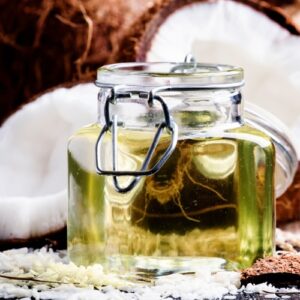
CCO is abundant in medium-chain fatty acids (MCFAs), particularly lauric acid, which constitutes as much as 50% of its composition. It exhibits a semi-solid consistency at ambient temperature, possesses a pronounced coconut aroma, and features an elevated saponification value, rendering it optimal for soap and surfactant production.
Processing
Crude Coconut Oil is subjected to minimal processing in its unrefined state. It may undergo refinement to yield RBD Coconut Oil (Refined, Bleached, Deodorized), which is employed in culinary, cosmetic, and pharmaceutical applications. Fractionation additionally permits the separation of liquid (olein) and solid (stearin) components for targeted industrial utilization.
Refining
CCO – refined to comply with food & cosmetic-grade benchmarks. Eradicates contaminants, scents & coloration. Augments shelf life for sensitive applications. Refined coconut oil frequently employed in soap base, hair care, creams & oleochemicals.
Crude Coconut Oil (CCO) Applications
Application in Food Industry
Coconut Oil is employed in manufactured food products such as bakery fats, confectionery, coffee creamers, and dairy alternatives owing to its stability, subtle flavour, and nutritional profile. It is also favoured for frying on account of its elevated smoke point.

Application in Oleochemicals
Its elevated lauric acid concentration renders it an indispensable feedstock in the fabrication of fatty acids, methyl esters, glycerine, soap, and surfactants. It is extensively employed across the beauty, personal care, and hygiene sectors.
Application in Animal Feed
Coconut cake, the remaining material following oil extraction, serves as a protein-dense component in livestock feed. Coconut oil may also be incorporated into energy-rich animal feed blends.

Application in Bio-based Products
As a renewable, plant-derived oil, coconut oil advances sustainability objectives within the biofuel, biolubricant, and biopolymer sectors. Its chemical resilience and biodegradability render it an environmentally responsible option for sustainable manufacturing.

Packaging
| Packaging Type | Typical Size / Capacity | 20ft Container Loading (Net Weight) |
|---|---|---|
| Steel / HDPE Drums | 180 kg, 184 kg, 190 kg, 200L | 80 drums (184 kg) ≈ 14.7 MT |
| IBC Totes (Paper or Plastic) | 1,000 L per tote | 18–20 totes ≈ 18 – 20 MT |
| Flexitanks | 21,000 – 24,000 L | 19.3 – 22 MT |
| ISO Tanks | 24,000 L | ≈ 22 MT |
| Bag-in-Box (BIB) | 20 L | For smaller-scale distribution |
Certification
| Certification | Issuing Body / Standard |
|---|---|
| MSPO | MSPO 2.0 (MS2530:2022) |
| Halal | JAKIM |
| Kosher | Recognized agencies (e.g., STAR-K) |
| ISO 9001 | International Organization for Standardization |
| ISO 14001 | International Organization for Standardization |
| GMP | Good Manufacturing Practices |